
01 — 八女
Yame, Fukuoka
- Region
- Yame, FukuokaKyushu, Japan
- Tea since
- 1423Seeds planted at Reigan-ji
- Known for
- GyokuroJapan’s most shaded tea
- Our source
- Yame onlyNo blending across regions
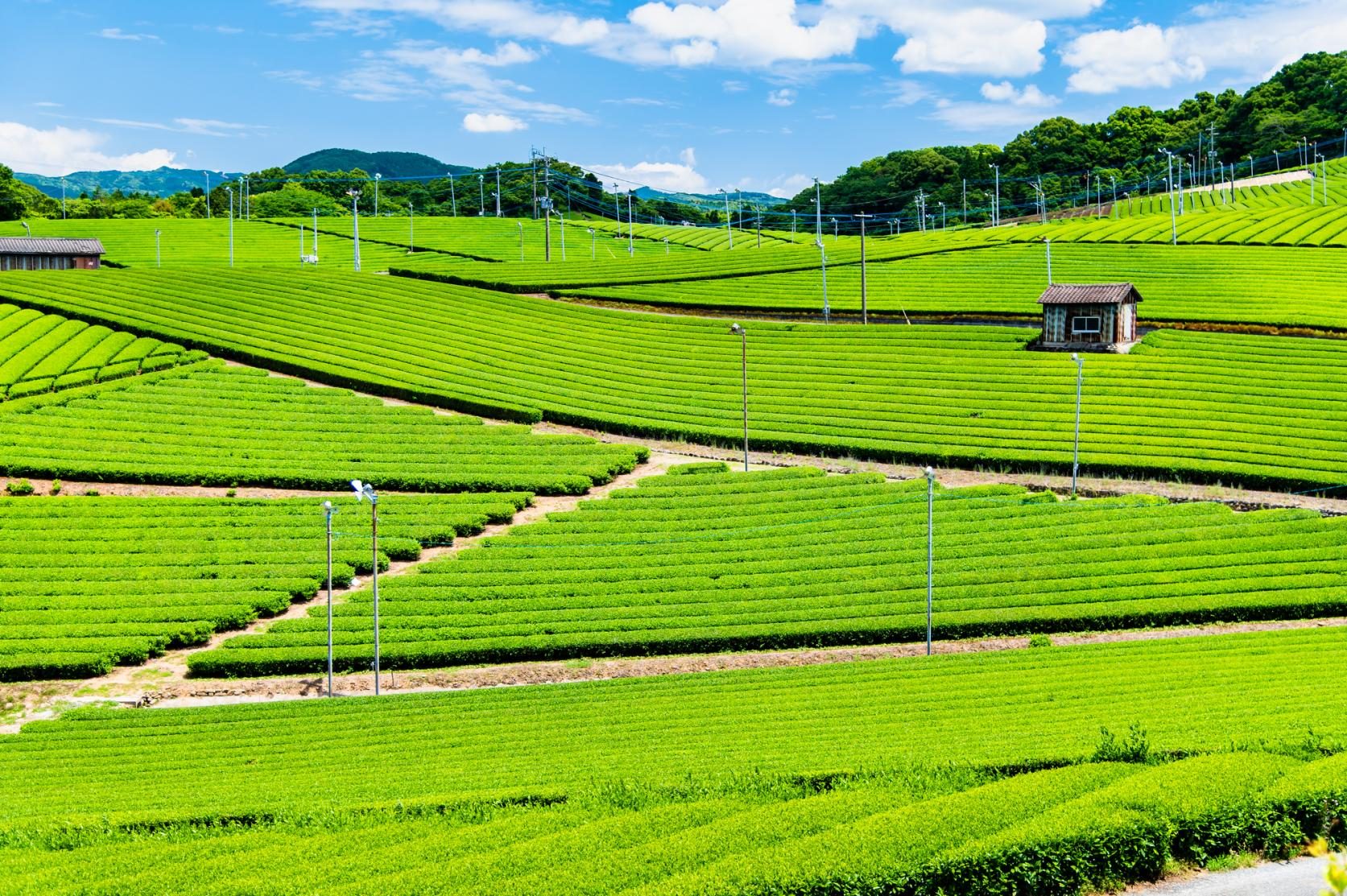
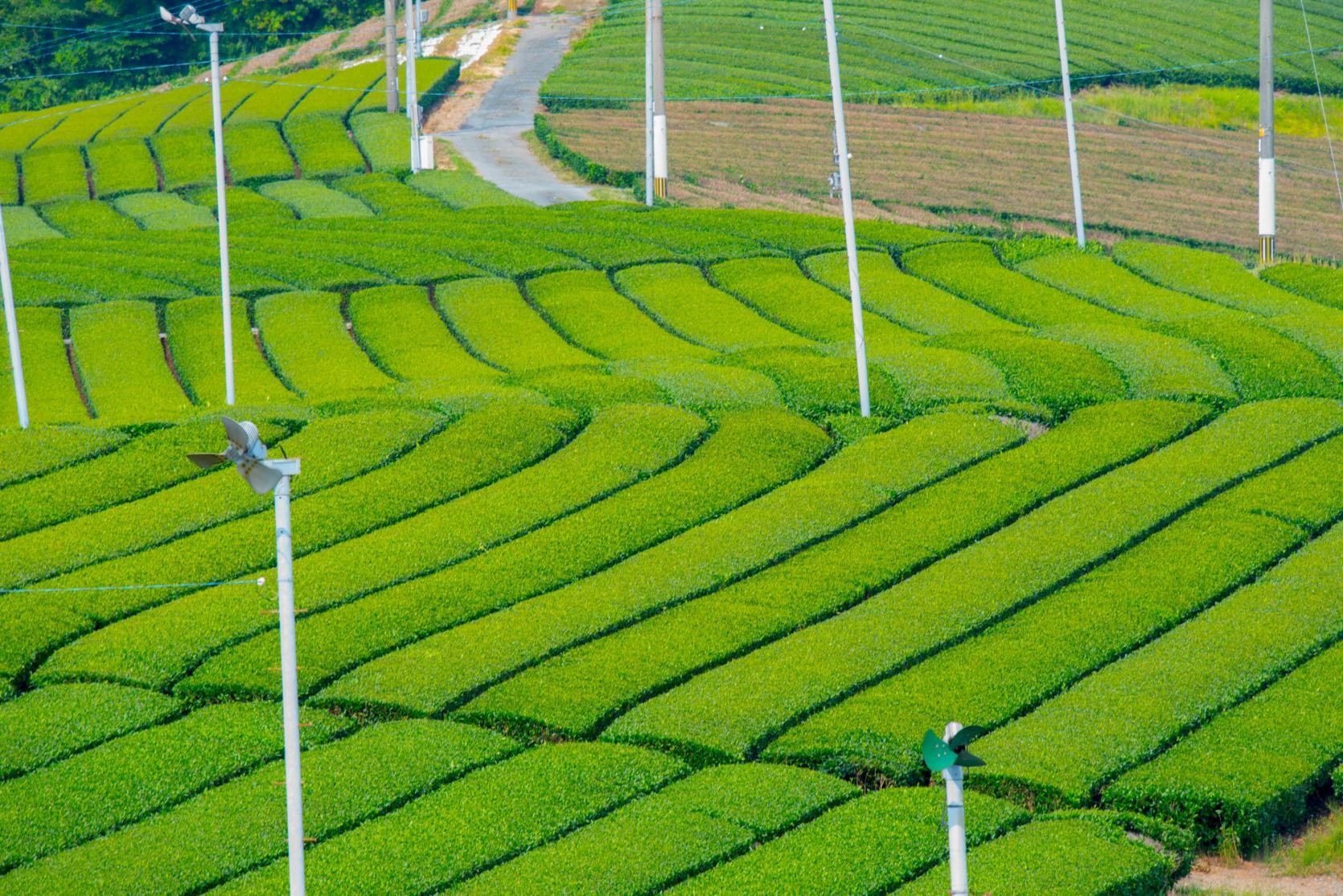
Tea fields in Yame climb the hills along the Yabe and Hoshino rivers. River mist settles over the slopes in the morning, and nights are much cooler than days. The leaf grows slowly and keeps more of its sweetness and umami.
Yame is best known for gyokuro, the most carefully shaded of Japanese teas. Yame Traditional Hon Gyokuro was registered under Japan’s Geographical Indication system in December 2015. The same shading craft goes into the tencha that becomes our matcha.
02 — Why one origin
A name you can say out loud
Transparent
Every tin traces back to one region, and we will name it. Your audience asks where the tea is from; you have a one-word answer.
Consistent
One terroir gives one character: soft, sweet and deep green. It does not shift with whatever leaf was cheapest that season.
Reliable
The same farms, the same stone mills, the same grade in every batch — so what you tell people once stays true.
03 — Leaf to powder
Six steps from the field
- 01
Shade
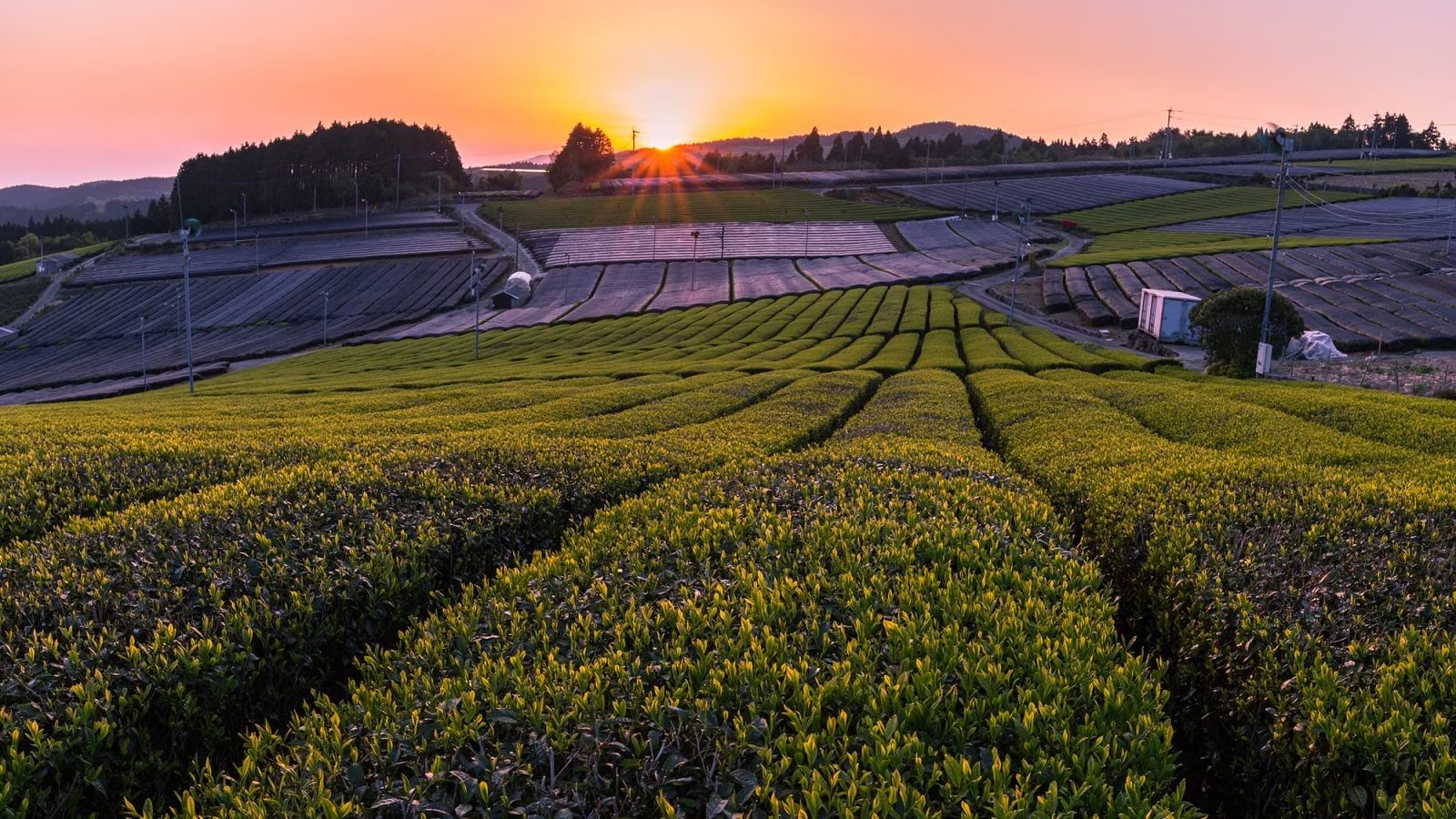
About three weeks before harvest the fields are covered. With less sun, the leaf makes more chlorophyll and theanine and less bitterness.
- 02
Pick
Only spring’s first flush: the youngest, softest leaves of the year.
- 03
Steam
Leaves are steamed within hours of picking. This stops oxidation and keeps the green.
- 04
Dry
Unlike sencha, the leaf is never rolled. It is dried flat.
- 05
Sort
Stems and veins are removed. What remains is tencha, the raw material of matcha.
- 06
Mill
Granite mills turn slowly. One mill grinds only about 40 g an hour, which keeps the powder cool and fine.
04 — In one line
If you only say one thing
Single-origin matcha from Yame, Fukuoka.
05 — Visit
See it for yourself
Walk the fields and the factory with the people who make your matcha.